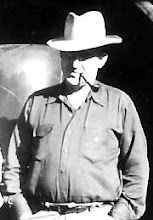
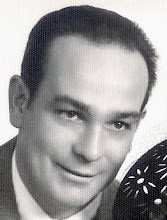
Since my father looked like an Indian, I have always wondered if I too am part Indian. I have studied my genealogy for a number of years and I have found that my fathers grandfather, George Henry Porter was not part Indian, but my grandfather, a son of Cassie Ellen Courtright may have had an Indian ancestor and/or Spanish. So my search still goes on.
I have recently discovered that my great grandmother Mary Jane Johnson, who married my Grandfather Amos Doers in 1881, had her first child out of wedlock. It is not clear if this child is a son of Amos or not. This comes as a big surprise to me. Imagine living with a man you are not married to in the 1880's. Mary always told the family that her mother died in childbirth (not true) and nobody cared enough to keep track of her birth. She essentially indicated that she had no real family. I later learned through decedents of Mary's brother and sister that her mother did not die giving birth to Mary. Apparently, Mary did not want her children or grandchildren to know she lived with Amos for a year or so when she was not married to him.
I also just found out that one of my great great great? Grandmother's, on Mary's side, was raped by her father. However, the worst thing I learned was Mary's family had a strong gene for depression, bipolar, and anxiety disorders. Almost every family member for generations have been plagued by this disease. Sure enough I have the disease and so have numerous living relatives.
My mother Ruby, always told me that Mary was a very beautiful woman who she remember as being extremely patient. However, at her death bed she told my mother that she had never had a happy day in her life. IT'S A NO BRAINER. SHE WAS DEPRESSED!
To close on a happier note. My mother's family were also extremely intelligent, artistic and musical. They had a wonderful sense of humor and laughed a lot, when they were not depressed. LOL
Copyright 2008
Thursday, December 11, 2008


Wednesday, December 10, 2008
Excerpts from my memoir, True Tales of Whitethorn
Good morning everyone: Today I am going to publish an excerpt from my book, True Tales of Whitethorn.
TRUE TALES OF WHITETHORN
Somewhere near the Lost Coast, California
Circa 1947
Loggers and Indians: Trick or Treat
I was nine years old when this took place.
Although my grandmother, Blanche Doers is half Welsh, I think she looks like the Indian Chiefs you see in those old, faded photographs. She is almost six feet tall, has a long nose, and looks very serious. She also knows how to stalk a deer and is a crack shot. When hunting season comes around, she won’t go hunting with the men. She hikes alone into the hills and always comes back with a deer. If the men should return empty handed, she has a good laugh.
Tonight we are all feasting on my grandma’s deer. My mom has fried deer meat and baked potatoes and opened a can of green beans. She divides the potatoes and beans up between the four of us and places a big platter of lip-smacking deer meat in the middle of the table. Al, my step-father, moves the Coleman lantern to the back of the table to make room for the pile of steaks. I dive right in and fork up a big juicy piece, lather lots of butter on it, cut off a chunk, and wolf it down.
“You’re a great hunter,” I tell my grandmother, as I chew down on the deer meat. “I bet you could even out hunt the Indians that used to live here.”
She flashes a rare smile. “I don’t think I’m as good as an Indian, but I’m a better shot than the lumberjacks who work in the mills and the loggers who cut down the trees.”
“I sure wish I was an Indian,” I say.
“I’ve always told you, you might be part Indian,” my mother reminds me. “Your father still can’t get a drink in a bar, unless the bartender knows him, because of his dark skin, straight black hair, and dark brown eyes.”
“What does looking like an Indian have to do with buying a drink?” I ask, my mouth still working on the meat.
“It’s against the law to sell liquor to Indians.”
“Why?”
“They say Indians get crazy when they drink so they passed a law about not selling to them,” she replies.
“You better hope you’re not part Indian,” says Al, who has been busy gulping down a chunks of meat. “Last Saturday night a bunch of Indians came up here and tried to get drinks at the Bar. They probably thought they could get away with it because we’re so far out in the mountains. But we don’t want Indians up here causing trouble.”
“Were you there?” I ask.
“I was home playing pinochle with your mother. I heard the bar was already filled with lumberjacks and loggers having drinks and playing cards when the Indians walked in. Everybody froze, bottles of beer hanging half way to their mouths. A couple of men stepped in front of the Indians and told them to get out and go back to wherever the hell they came from.”
I feel myself getting mad. The loggers had no right to treat the Indians like this. “Did they leave?”
“They sure didn’t. As they shoved their way up to the bar, big ol’ Mel Turner took a swing at one of ‘em and everyone else piled on and started slugging away.”
Copyright 2008
Tuesday, December 9, 2008
Whitethorn Cook House
In the late forties Albert Sharpe hired Alan Doers (my uncle) and his wife Pearl to run the Whitethorn Cook House for the men working in his mill. Alan was the son of Guy and Blanch Doers. Like his father, Alan was a wonderful story teller. As a child I watched him hold a crowd of people, laughing until they cried, while he told the story of driving a truck with no brakes down a steep mountain road.
Alan and Pearl ran the cook house for about a year and then it was closed down.
Copyright 2008
Alan and Pearl ran the cook house for about a year and then it was closed down.
Copyright 2008
Monday, December 8, 2008
Albert P. Sharpe
Albert Sharpe was my step-father. He came to Whitethorn in the late thirties or early forties and bought the Whitethorn Lumber Company. He also owned about 700 acres of land in and about the Whitethorn Valley. He was born in Canada and ran away from home in his teens because his parents wanted him to work in the family store rather than go on to school. His first stop was a coal mine where he worked for several yearss. He was a master poker player and the way he got his stake to go to the Redwood timber country was by playing poker with the minors.
At Whitethorn (Thorn) Al eventually bought or built the Whitethorn bar in joint ownership With George Martin and his wife Virginia. Virginia ran a restaurant in back of the bar and was quite the cook. Many families bought their children to the restaurant and children were allowed in the bar because there was no law enforcement in the valley.
Al was greatly respected in the valley because he owned the mill and employed many of the men in Thorn and partly because no one was ever able to put his arm down. He also played poker in the bar in winter and was viewed as not only the best poker player in town but the best bluffer. He never let anyone see his hand unless they put up the money in the pot. When he won he would smile and tell who ever he was playing with to come back next time when he had learned how to play. Copyright 2008 Sharon Porter Moxley
Answer to question
The reason high tree climbers did not like to climb at the noon hour was because the sun shined directly down on them and they couldn't see well. Sometimes the semi-blinded logger fell to his death because he didn't loop the rope correctly on the tree.
Saturday, December 6, 2008
Question of the day
Question: Why did loggers avoid climbing to the tops of high trees during the lunch hour?
Copyright 2008
Copyright 2008
Thursday, December 4, 2008
Back in action
Well my leg has finally healed from my fall down a bank at Bull Creek. I am going to review the purpose of the blog for new readers.
I lived in the backwoods of Humboldt County, California most of my childhood and did not appear in civilization until I was almost thirteen when my family moved to Santa Rosa, California where I continue to live.
Despite the early days in the Redwoods I graduated from college and became a school psychologist. I am now retired and writing a book called The Whitethorn Kid, True Tales of Whitethorn (somewhere near the Lost Coast).
The following is part of a chapter which takes place when I was in the third grade.
TALES OF WHITETHORN
Somewhere near the Lost Coast, California
CHILDREN OF THE REDWOODS
Barbara and I run the woods a lot. We have a big tree house inside a burnt out trunk of a huge redwood tree. It is in a grove of redwoods, which people say has been there for over 2000 years. The big old trees are so quiet and still, we think they have spirits in them or perhaps ancient Gods that are keeping an eye on the two of us.
Barbara read a book once about Lamas who live in a place called Tibet. I don't know what a Lama is, but we think that they might be the very spirits that are in our huge trees. Barbara says the lamas are magical women who are fantastically powerful. They wear bright colored clothes, and the most powerful Lamas are dressed in brilliant red robes.
One day we were scrutinizing our biggest, tallest tree and we came to the conclusion that this particular tree was so mysterious and hallowed, it was likely that one of those magical Lamas was in this tree. After that, we started watching for signs that would tell us if lama lived in a tree. After much discussion, and some outstanding detective work, we began to notice the mushrooms that sometimes grew between the scraggly red bark of the trees. The mushrooms came in all sorts of fantastic shapes and sizes. Some were flat and stacked like pancakes and others were built like lofty fairy castles. They came in all kinds of colors just like the Lamas who lived in Tibet. The mushrooms became our best clue that a lama lived in the heart of the tree. From then on, when we discovered colored mushrooms growing on a redwood tree we knew that a red Lama or an orange Lama probably lived in the tree.
When we are out in the forest we also find wild orchids growing, beneath our gigantic trees, in the spring. They are small, pink and real pretty. My mother says they are called Lady Slippers. Then there are these other flowers that looks like lady slippers but they are an ugly, greenish brown color, and they sink like the devil. Barbara and I found an old book that had a picture of one of those awful flowers and the name of it was Fettered Adders Tongue. We found out later that this means smelly snakes tongue. Now I never smelled a snakes tongue before, but I am sure it would smell just like one of those flowers. I wonder if the guy who named those flowers went around smelling snakes tongues? If he did, he sure didn't live here in Whitethorn. We have better sense than that around here.
Subscribe to:
Posts (Atom)

 Posts


